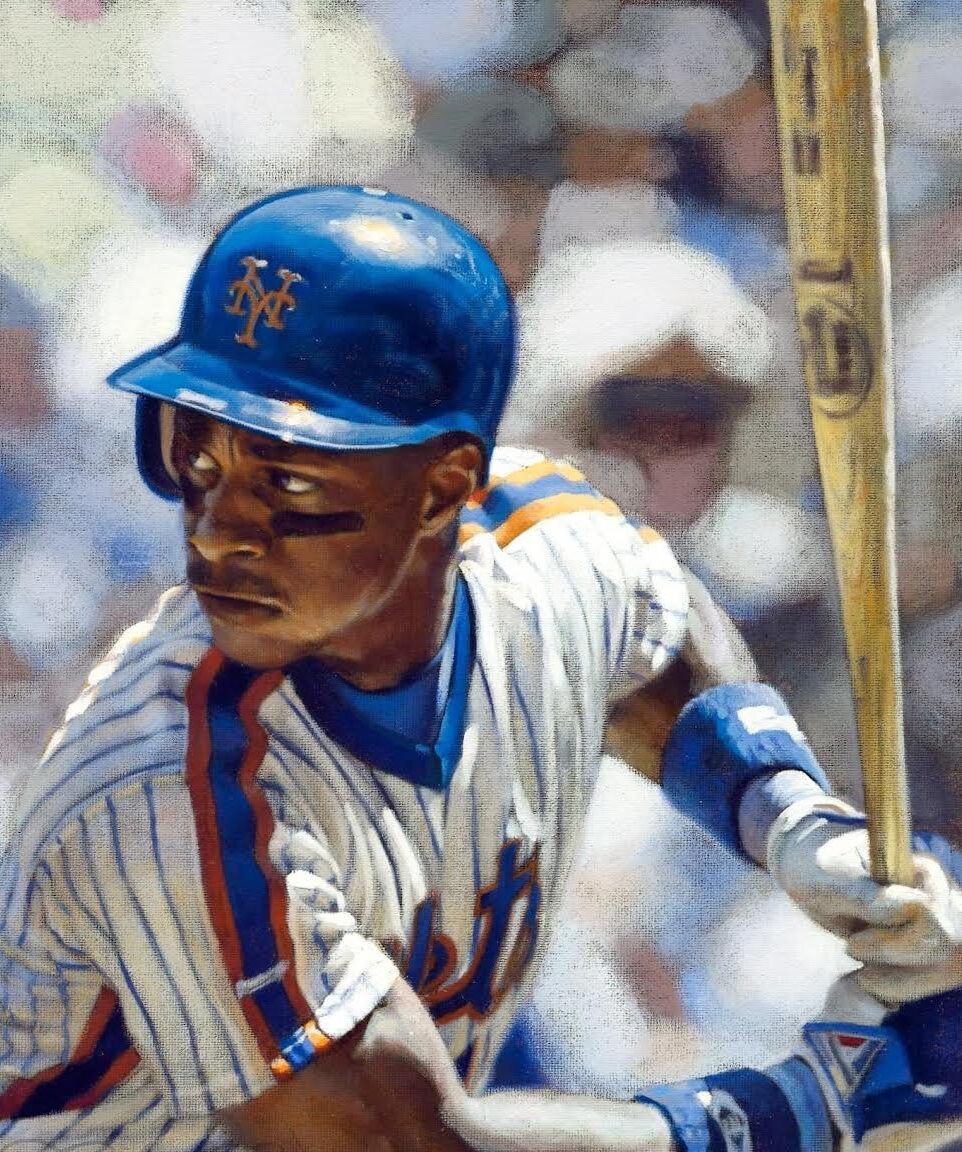
Jesse Orosco

| Birthdate | 4/21/1957 |
| Death Date | |
| Debut Year | 1979 |
| Year of Induction | |
| Teams | Brewers, Cardinals, Dodgers, Indians, Mets, Orioles, Padres, Yankees |
| Position | Pitcher |
Former All Star Jesse Orosco pitched in an MLB-record 1,252 games during his 24-year big league career that spanned from 1979-2003.
Leave a commentIn the collection:

Jesse Orosco began his Mets career as the player to be named later in a trade of Jerry Koosman
Jesse Orosco began his Mets career as the player to be named later in a trade of Jerry Koosman

Jesse Orosco was drafted in the 7th round in 1977 by the St. Louis Cardinals. Instead of signing, the left-hander returned to Santa Barbara City College. After another fine collegiate campaign, the Twins took him tin the 2nd round of the January phase of the draft in ’78.
After one minor league season playing for the Twins team in the rookie league, Minnesota packaged him in a deal to land veteran pitcher Jerry Koosman from the Mets. A Minnesota native, Koosman was coming off of a ’78 season in which he lost 15 of 18 decisions for New York.
His first year in his hometown Koosman won 20 games and finished 2nd to San Diego’s Randy Jones in Cy Young voting. He followed that up with a 16-win season in ’80.
Despite Koosman’s renaissance, the Mets got the better end of the trade. From 1981 until the rest of his career in 1985 Koosman went 46-46 with a 4.00 ERA. Orosco on the other hand blossomed into one of the game’s most dependable relievers.
From 1983-1987 Orosco won 42 games, saved another 102, and pitched to a 2.61 earned run average. During the run the lefty made two All Star teams and recorded the final out of the Mets’ triumph in the 1986 World Series.
When Orosco’s time in the Big Apple was up in 1987 he left as the team’s all-time saves leader. Orosco pitched past his 46th birthday and left the game as the all-time leader in appearances by a pitcher.
Shown here is pair of Topps cards signed by Jerry Koosman. The one on the left honors his All Star season in ’69. “Koosman Shuts the Door” is the card on the right, recognizing his World Series-clinching Game 5 performance.

Like Koosman, Jesse Orosco was on the hill for the final out of a Mets World Series triumph
Like Koosman, Jesse Orosco was on the hill for the final out of a Mets World Series triumph

Jesse Orosco had a long and productive big league career that spanned parts of four decades from the 1970s-2000s.
A second-round pick of the Twins in 1978, he was traded to the Mets a year later. In April of ’79, the 21-year old Orosco made his major league debut, pitching 18 games for New York.
By 1982 the left-hander was in the show to stay, appearing in at least 40 games every season from ’82-’99. In 1983 Orosco posted a 1.47 ERA, winning 13 games and saving 17 more. He was rewarded with the first of back-to-back selections to the All Star Game. The reliever finished third in the Cy Young Award.
From ’81-’86 Orosco was a valuable man in the Mets bullpen. During the 6-year run he won 43 games, saved 91 and had a stingy 2.31 earned run average. When the Mets won the 1986 World Series, it was Orosco who recorded the final out.
After he slipped to 3-9 with a 4.44 ERA in ’87, the Mets dealt him to the Dodgers. The timing for Orosco couldn’t have been better. Pitching to the tune of a 2.72 ERA, Orosco earned his second ring when the Dodgers beat the heavily-favored Oakland A’s in the ’88 Fall Classic.
From 1988 until he retired in 2003, Orosco pitched for eight teams. Five of those clubs allowed him to leave after just one season.
With the role of left-handed specialist, Orosco held a big league job until he was 43 years old. For his final 9 seasons starting in 1996, Orosco was among the five oldest players in his league. On June 25, 1999, as the majors’ oldest player, Orosco pitched in his 1,051st game. The contest pushed him past Kent Tekulve’s career record for appearances by a hurler.
Over the next four seasons Orosco extended the record to 1,252. His career statistics include an 87-80 record, a 3.16 ERA and 1,179 strikeouts. Orosco’s career WAR stands at 23.2, ahead of such fireman as Sparky Lyle, Craig Kimbrel, Tug McGraw, and Kenley Jansen.
When he retired, Orosco reflected on his 24-year big league career in an interview with the Los Angeles Times.
“To take it a quarter-century — I never imagined that. It’s a sad day that I have to call it quits. But it’s a great day, too, for the fact I fulfilled my dream.”
Shown here is a 1980 Topps Mets Future Stars baseball card. Orosco and 1986 Cy Young Award winner Mike Scott have signed the card.