Larry Doby
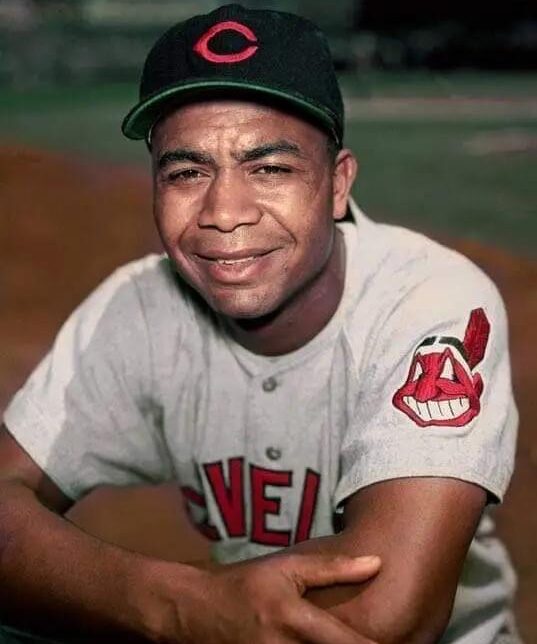
| Birthdate | 12/13/1924 |
| Death Date | 6/18/2003 |
| Debut Year | 1947 |
| Year of Induction | 1998 |
| Teams | Indians, Tigers, White Sox |
| Position | Center Field |
Seven-time All Star Larry Doby broke the American League’s color barrier when he debuted for the Cleveland Indians on July 5, 1947.
Leave a commentIn the collection:
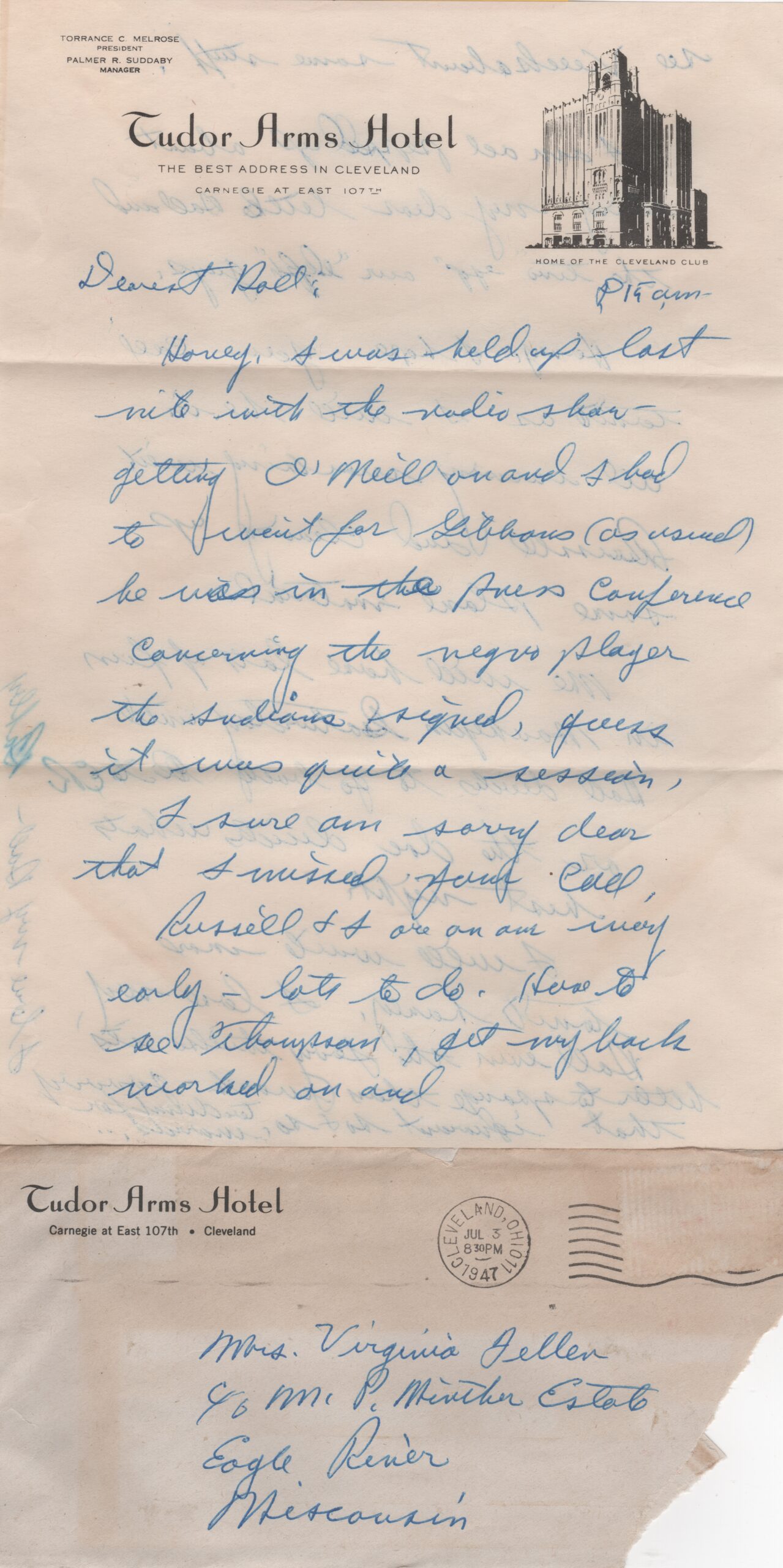
Bob Feller wrote this letter the day first Larry Doby put on a big league uniform
Bob Feller wrote this letter the day first Larry Doby put on a big league uniform

It’s difficult today to imagine Major League Baseball excluding player based on the color of their skin. That’s just what MLB did until 1947 when Jackie Robinson and Larry Doby integrated the National and American Leagues.
Indians owner Bill Veeck purchased Doby’s services from Effa Manley and the Newark Eagles on July 2nd, 1947. Manley called Doby early in the morning to inform him. Once he accepted the offer, a phone press conference was arranged. Among those on the call was Frank Gibbons, the Indians beat writer for the Cleveland Press.
Meanwhile in Cleveland, Feller’s Indians took a 6-5 loss to the Tigers. Detroit manager Steve O’Neill was the Cleveland pilot when Feller broke in at age 17. O’Neill looked after the young pitching prodigy who came to see him as a father figure.
Shown here is a historic letter written by Indians pitcher Bob Feller to his wife Virginia. Notice the envelope with the Cleveland postmark of July 3, 1947, the day after Doby signed with the Indians.
Feller writes in part, “Honey, I was held up last nite with the radio show – getting O’Neill on and I had to wait for Gibbons (as usual) he was in the press conference concerning the Negro player the Indians signed. Guess it was quite a session.”
Feller penned this the same day Doby first donned a big league uniform to break the color barrier in the American League. Few could have imagined the impact Doby’s signing would have on the game and American society.
While Robinson is remembered for breaking baseball’s color barrier, Doby as the AL’s trailblazer, experienced the same struggles. Both Robinson’s Dodgers and Doby’s Indians have statues outside their stadiums honoring their man. Doby’s #14 is retired in Cleveland while Robinson’s #42 is retired throughout the game.

Larry Doby was in the midst of a career year when the Indians purchased his contract
Larry Doby was in the midst of a career year when the Indians purchased his contract

Larry Doby left the Newark Eagles after the July 2nd contest. At the time of his departure he led the Eagles in most offensive categories. In 30 games played his numbers included 8 homers, 41 RBI, a .354 average, .438 on-base percentage, and a .743 slugging mark.
Doby played in 29 games for the Tribe in his first year in Cleveland. Along the way he acclimated himself to the trial and tribulations that came with being the league’s first African-American player. Doby entered spring training in ’48 with a better understanding of the challenges ahead. Soon he began a Hall of Fame ascent.
Through his first 13 games of the season, Doby hit .286 with 5 homers and 14 runs batted in. He finished the year with a .301 average and a 135 OPS+, helping the Indians win the World Series.
During his 13-year big league career, Doby hit 20 or more homers eight times. Twice he led the AL in long balls. The outfielder made the All Star Game every season from 1949-1955. During that 7-year run he slashed .286/.394/.505 with a 146 OPS+, averaging 27 homers and 95 RBI per season.
He was inducted into the Baseball Hall of Fame in 1998.
Shown here is the second page of Bob Feller’s letter from Doby’s first day in a big league uniform. In the correspondence he writes, “Have to…get my back worked on and see [Indians owner Bill] Veeck about some stuff.”
After missing the chance to call his wife the previous day because of the Doby announcement, Feller was eager to speak to her.
“Honey, hope you call tonight as I will be in all evening…” Feller closes the letter, “I love you Doll.” He then signs the letter “Bobby”.
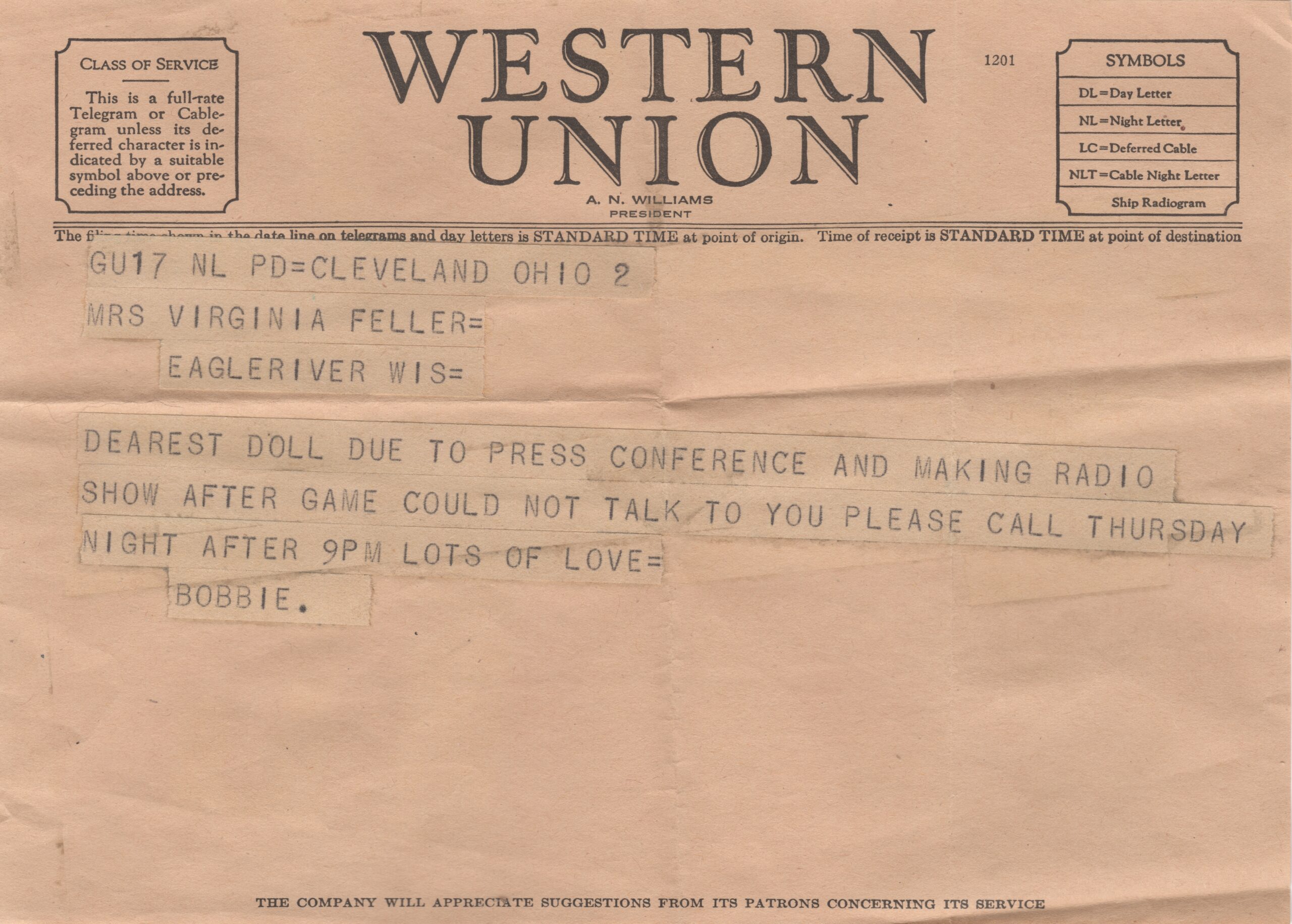
Feller stayed in close touch with his wife Virginia throughout the '47 season
Feller stayed in close touch with his wife Virginia throughout the '47 season

According to the Hall of Fame’s website, Feller once said of Doby, “He was a great American, he served the country in World War II, and he was a great ballplayer. He was kind of like Buzz Aldrin, the second man on the moon, because he was the second African-American player in the majors behind Jackie Robinson. He was just as good of a ballplayer, an exciting player, and a very good teammate. ”
The image above shows the telegram Bob Feller sent to his wife. It mirrors the content of the letter.
“DEAREST DOLL DUE TO THE PRESS CONFERENCE AND MAKING RADIO SHOW AFTER GAME COULD NOT TALK TO YOU PLEASE CALL THURSDAY NIGHT AFTER 9PM LOTS OF LOVE BOBBIE”
Feller had little idea of the impact the signing of Doby would have not only on baseball, but on the American Civil Rights movement as a whole.
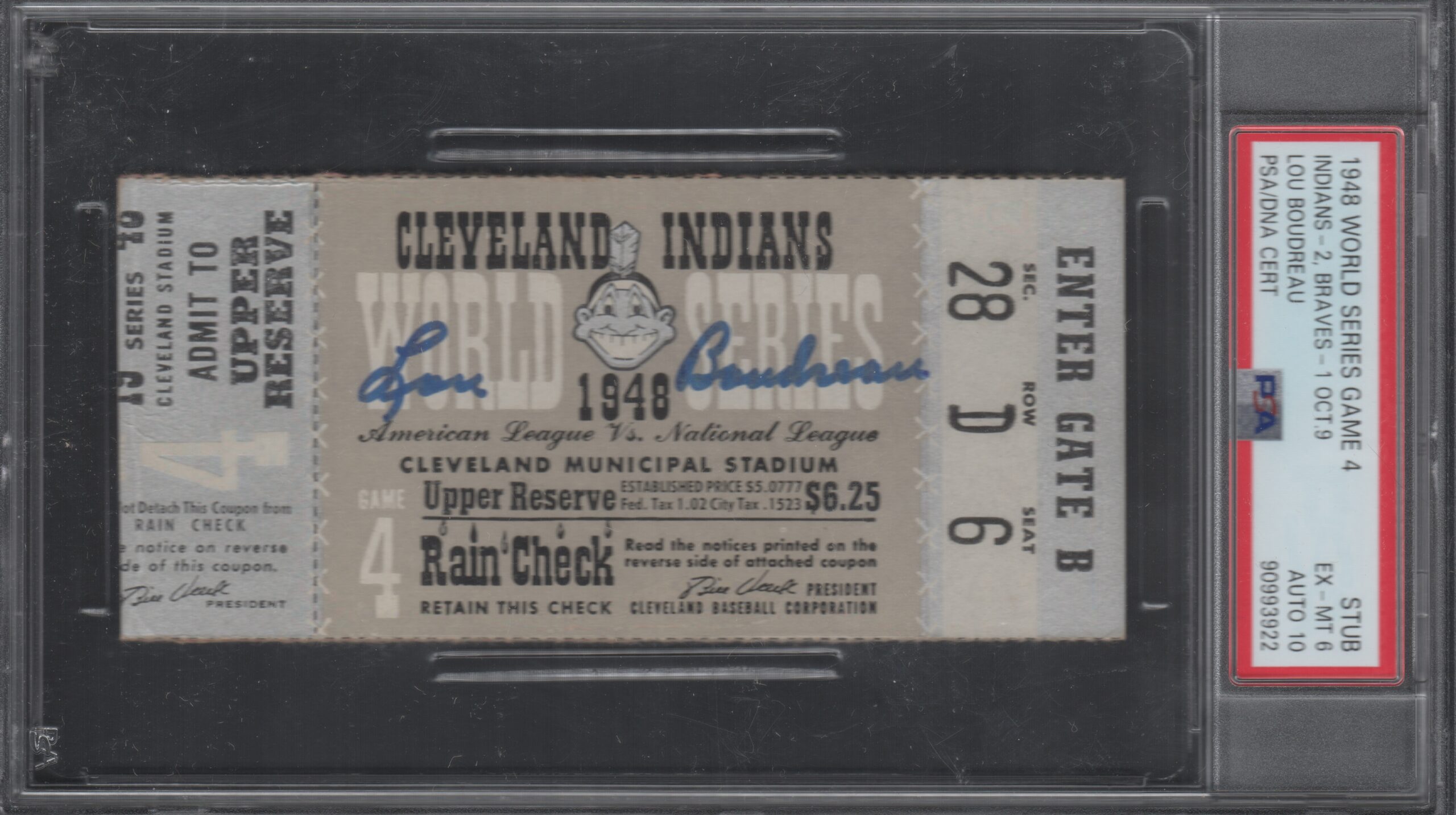
In Doby's second year in the bigs, he helped the Indians win the 1948 World Series against the Braves
In Doby's second year in the bigs, he helped the Indians win the 1948 World Series against the Braves
Larry Doby made the jump from the Newark Eagles to the Cleveland Indians in 1947. That season he played in just 29 games with the Tribe but set the foundation for a long and successful big league career.
The next season Doby played in 114 games in the outfield while hitting an impressive .301, with 23 doubles and 16 home runs. His performance helped Cleveland earn the pennant and a date in the World Series against the Boston Braves.
Playing in all six Fall Classic contests Doby made his mark, going 7-for-22 (.318) at the plate, with two walks, a double, and a home run. His efforts helped the Indians win it all for the second time in franchise history.
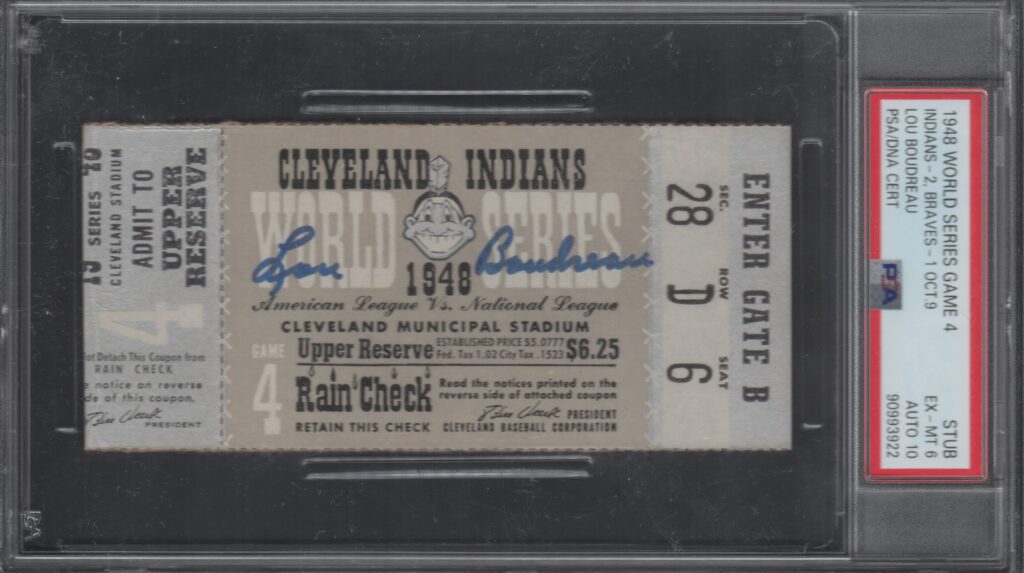
Shown here is a ticket to Game 4 of the 1948 World Series signed by 1948 MVP Lou Boudreau. Doby played a large part in the Indians victory that day. With his team clinging to a 1-0 lead, Doby smashed a third inning solo home run. His shot proved to be the difference in the 2-1 Cleveland triumph.
The 1949 All Star Game featured African-American players for the first time
The 1949 All Star Game featured African-American players for the first time
Two years after he broke baseball’s color barrier, Jackie Robinson became one of a quartet of men to break the same barrier for the All Star Game. That 1949 contest featured Jackie as a starter at second base.
Dodger teammates catcher Roy Campanella and pitcher Don Newcombe also made the National League squad. The American League’s trailblazer was outfielder Larry Doby.
Doby’s Junior Circuit club prevailed in high-scoring 11-7 affair. Joe and Dom DiMaggio each had a double and a single while combining for four RBI and 3 runs scored.
For the losing side, Stan Musial and Ralph Kiner each hit homers in front of the Brooklyn faithful at Ebbets Field.
The AL victory was it’s 12th win in the first 16 All Star contests.
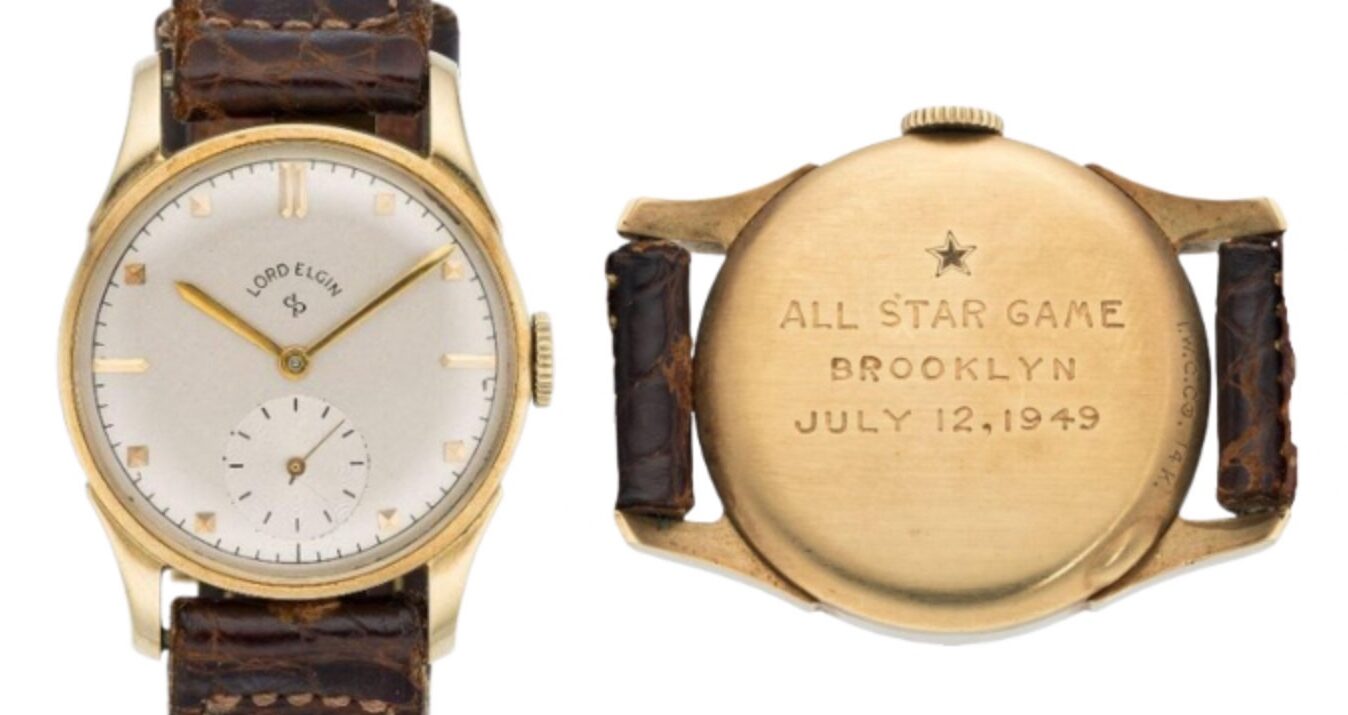
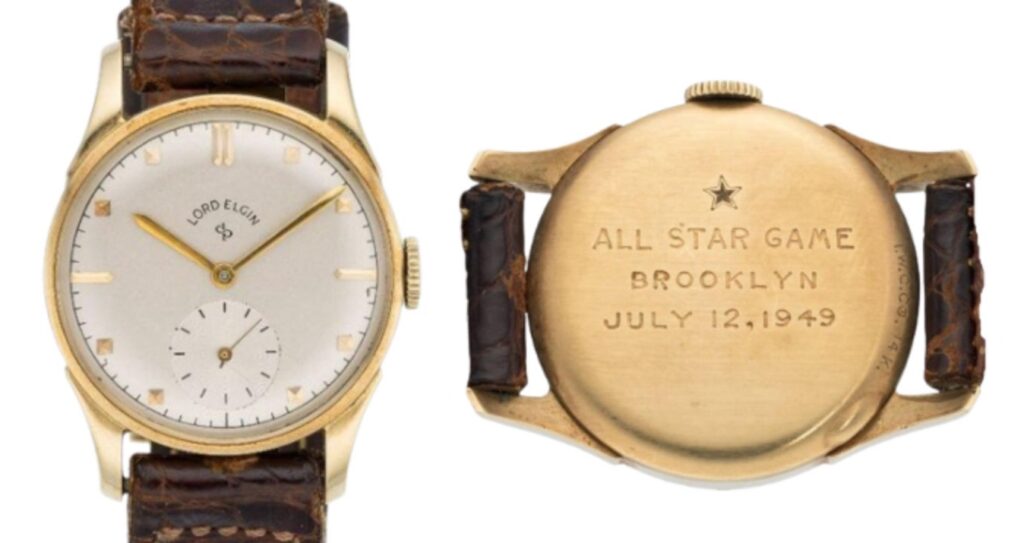
Shown here is a 14-karat gold wristwatch given to American League President William Harridge. The inscription on the back of the watch reads, “All Star Game Brooklyn, July 12, 1949”.

The White Sox released Doby in 1959, spelling an end to his MLB playing career
The White Sox released Doby in 1959, spelling an end to his MLB playing career

Larry Doby played his last Major League game on July 26, 1959 at Comiskey Park against the Orioles. His final big league at bat came as a pinch hitter in the 8th inning against 209-game winner Milt Pappas. Doby struck out.
Twenty-five days later, the White Sox sent him to their Triple-A club in San Diego. Shown here is the document dated August 20, 1959 that officially options Doby from the White Sox to the PCL Padres. This official transmittal of contract officially ended Doby’s big league playing career.
His stay in San Diego was short-lived. The following image and description sheds more light on what happened.

Doby's stay in Triple-A was ended when he broke his ankle sliding into third base
Doby's stay in Triple-A was ended when he broke his ankle sliding into third base

Three days after his demotion to Triple-A, Doby broke his ankle sliding into third base. The next day the team released him. Shown here is a document outlining the termination of his contract with San Diego.
Dated August 24, 1959, the correspondence ends the Padres’ financial responsibility to Doby. The outfielder was not ready to give up his playing career. Doby spent the offseason rehabbing the ankle, hoping to catch on once more with the White Sox the following spring.
The next document outlines Doby’s experience in spring of 1960.

Doby broke the American League's color barrier for managers in 1978
Doby broke the American League's color barrier for managers in 1978

After spending time in the minors in 1959, Doby worked out with the Chisox during Spring Training of 1960 but did not earn a roster spot. When Chicago broke camp and opened their season at Comiskey Park against the Kansas City Athletics, they also gave Doby his outright release.
This document, dated on Opening Day, April 19, 1960 officially releases Doby from the White Sox organization. Shortly afterward, he signed on with the International League’s Toronto Maple Leafs. Still hampered by the bum ankle, he was released in May before appearing in a game.
After a year away from the game, Doby played for Japan’s Chunichi Dragons in 1962. Later he returned to the majors as a coach with the Expos, Indians, and White Sox.
In 1978 Doby replaced former Indians teammate Bob Lemon as skipper of the White Sox. Like his playing days, he was the second African-American to manage a big league club, and the first in the American League.

After leaving the field, Doby remained active an an big league executive
After leaving the field, Doby remained active an an big league executive

Even after leaving MLB as a player, coach, and manager, Larry Doby remained active in the game. He worked for MLB helping outside companies that wanted to use former player or MLB trademarks. Many of his tasks including arranging card show appearances and speaking engagements for players.
It is in this capacity that Doby wrote this letter of January 11,1993 to Hall of Famer Reggie Jackson. Doby writes to Mr. October asking Reggie to peruse The Rules of Baseball by David Nemec and add comments that can be used on the back cover of the book or in marketing materials.
In 1995 American League president Gene Budig named Doby Special Assistant to the American League. The Veterans Committee selected Doby for the Hall of Fame in 1998.



Larry Doby deserves to be recognized on the same level of Jackie Robinson! As the first African-American in the American League, Doby went through all the same things Jackie did in the National League.
I agree in fact Larry Don’t in some ways had it worse because unlike Don’t he didn’t have the support of certain players such as Pee Wee Reese, Carl Erskine, and others.